
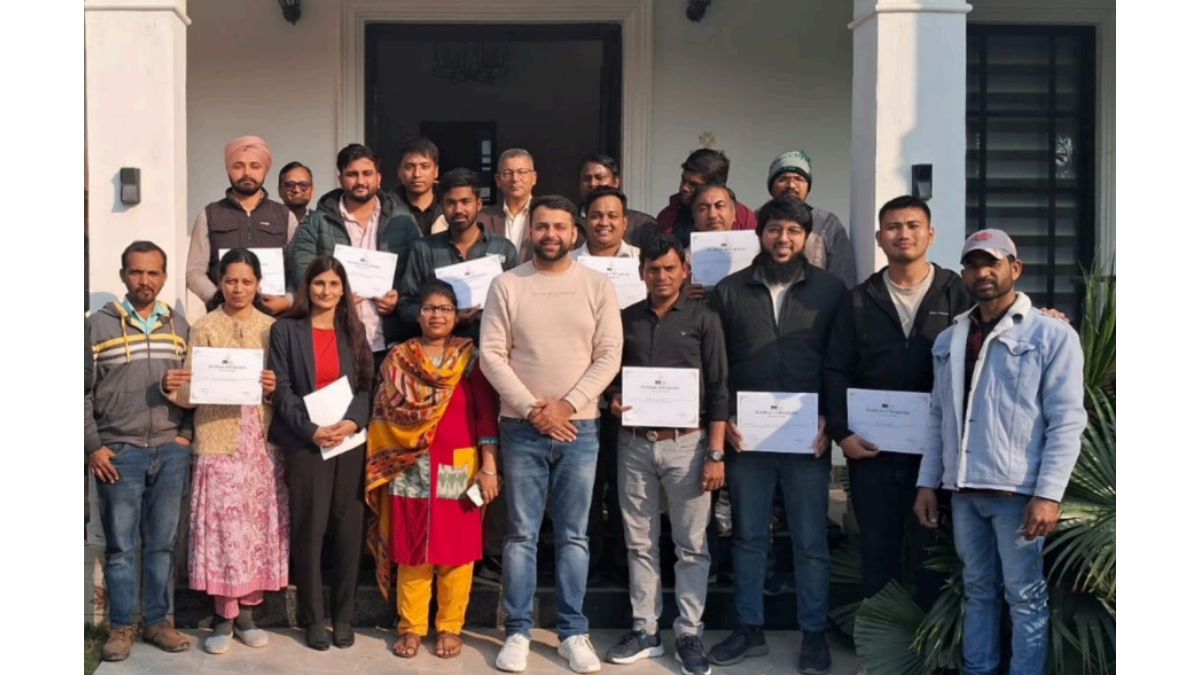
Hands-On Training on Commercial Laundry and Dry Cleaning Machines at Global Institute of Laundry Management (GILM), India’s Professional Laundry Education & Certification Academy
New Delhi [India], June 10: India’s laundry and dry cleaning industry is rapidly emerging as one of the most promising service-based business sectors in the country. With rising urbanization, busy lifestyles, dual-income households, and growing demand for convenience, professional laundry services are witnessing strong growth across metro cities as well as Tier 2 and Tier 3 markets.
Today, consumers are increasingly looking for reliable garment care solutions that offer hygiene, fabric safety, convenience, and timely delivery. This shift in consumer behavior is creating major opportunities for entrepreneurs planning to enter the laundry business in India.
However, industry experts believe many people still underestimate the complexity of the sector.
According to professionals associated with Global Institute of Laundry Management (GILM), one of the biggest mistakes entrepreneurs make is assuming laundry is a “simple business.” In reality, modern laundry operations involve fabric science, stain treatment systems, machine handling, chemical balancing, workflow optimization, customer experience management, and quality control processes.
“Laundry today is no longer a small traditional business. It is becoming a professionally managed service industry driven by systems, operational efficiency, and customer trust,” says Himanshu Sehrawat, industry expert associated with GILM.
As a result, people searching for “how to start laundry business in India” are no longer looking only for washing machines and shop rental costs. They are actively searching for structured business guidance, operational systems, practical exposure, and professional training.
Industry professionals say India’s organized laundry market still has massive untapped potential, particularly in residential societies, corporate hubs, hotels, hospitals, salons, student housing zones, and premium urban neighborhoods.

For entrepreneurs planning to enter the sector, understanding the actual laundry business cost in India is one of the first important steps. Depending on the city, business model, and scale of operations, a professional setup may require investment in commercial washing machines, dryers, steam irons, boilers, dry cleaning machines, water treatment systems, packaging infrastructure, and manpower training.
However, experts repeatedly emphasize that machinery alone does not guarantee success.
“Many entrepreneurs invest heavily in machines but ignore operational training. That often becomes expensive later,” says a senior trainer associated with GILM. “Without proper operational understanding, businesses face garment damage issues, customer complaints, rewash losses, high chemical consumption, inconsistent finishing quality, and low customer retention.”
This growing awareness is one of the key reasons why demand for laundry training courses in India and dry cleaning courses in India has increased significantly over the last few years.
Entrepreneurs today increasingly prefer learning the business before launching their stores.
Professional laundry training now extends far beyond basic washing techniques. Modern programs cover stain removal systems, fabric identification, dry cleaning processes, steam finishing methods, workflow management, packaging standards, customer handling, pricing strategies, quality control systems, and business operations.
Institutions offering commercial laundry training and laundry management courses are also seeing rising interest from existing laundry store owners who want to modernize traditional setups into organized service businesses.
Another major trend reshaping the industry is the growing importance of branding and customer experience. Organized laundry businesses are increasingly focusing on pickup and delivery systems, garment tracking technology, mobile applications, hygiene-focused operations, premium packaging, and faster turnaround times.
Experts believe today’s consumers are willing to pay more for reliability, convenience, professional finishing, and fabric safety.
A professional laundry business in India typically requires operational training, machine understanding, stain removal knowledge, workflow systems, customer service processes, and quality control mechanisms to achieve long-term profitability and scalability.
For first-time entrepreneurs, preparing a structured laundry business plan in India is becoming increasingly important. A well-planned business strategy helps estimate setup costs, operational expenses, expected profit margins, local market demand, staffing requirements, and service positioning.
Industry experts also recommend learning directly from institutes connected with real operational laundry businesses instead of purely theoretical educational programs. Practical exposure, live machine handling, and real-time stain removal training can significantly reduce beginner-level operational mistakes.
With changing lifestyles and increasing demand for convenience-based services, India’s laundry and dry cleaning sector is expected to continue expanding steadily over the next decade. From premium laundromats to pickup-and-delivery models and technology-enabled laundry services, the industry is opening new opportunities for entrepreneurs seeking scalable service businesses with recurring customer demand.
As awareness around professional garment care continues to grow, experts believe trained operators and professionally managed businesses will lead the next phase of growth in the Indian laundry industry.
For aspiring entrepreneurs, the message is becoming increasingly clear: success in the laundry and dry cleaning business is no longer just about owning machines — it is about understanding systems, quality, customer trust, operational excellence, and professional business management.
For more information, visit: https://globalinstituteoflaundrymanagement.com/
If you object to the content of this press release, please notify us at [email protected]. We will respond and rectify the situation within 24 hours.


